
The Four-Pane Window

Understanding Scope of Intervention in Community Services
By: Nick Haddock, Open Arms Director of Operations
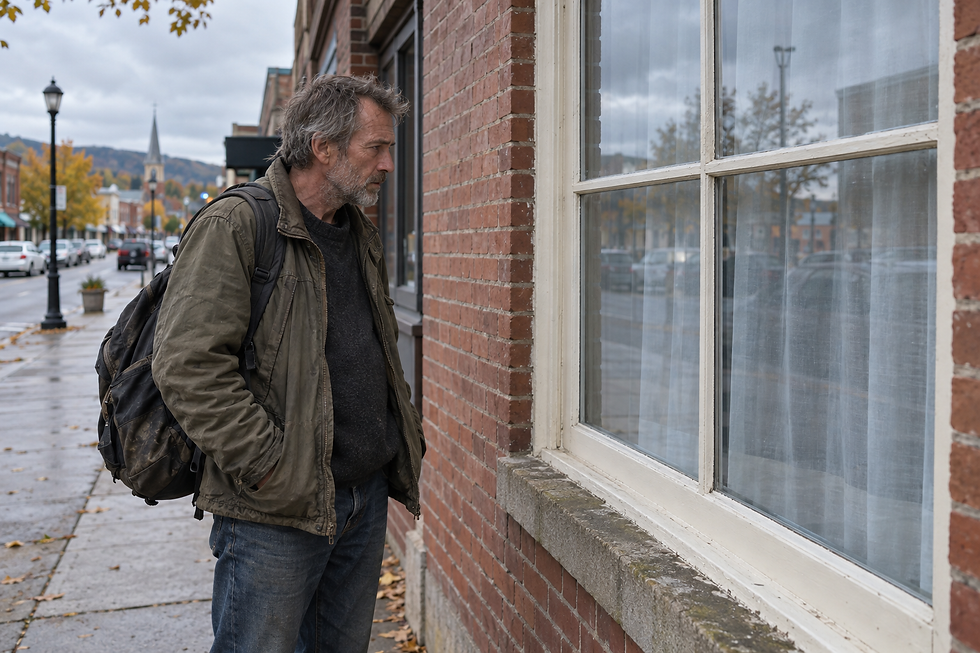
When we talk about homelessness, mental health, substance use and complex human needs, it can be difficult to understand why different professionals and organizations respond in different ways.
Part of the answer is scope of practice.
Different services have different levels of training, authority, regulation and responsibility. Some help people create their own change. Others directly introduce an intervention intended to create change. In very specific circumstances, some have legal authority to restrict a person’s choices or liberty.
A useful way to understand this is to imagine a window with four panes.
Each pane represents a different level and type of intervention. None is inherently better than another. Each exists for a different purpose.
Pane One: Non-Restrictive Psychosocial Support
Supporting people to create their own change
This is where Open Arms primarily operates.
Our work is about relationships, support and opportunity. We listen, build trust, help people identify options, remove barriers, connect them with services, provide housing-focused support, practice harm reduction and help people move toward goals they have identified for themselves.
We can encourage change.
We can create opportunities for change.
But we cannot control the change.
We cannot prescribe medication, provide regulated clinical treatment, diagnose a medical or psychiatric condition, or compel someone to make a particular choice simply because we believe it would be better for them.
The person remains the owner of the change.
This is central to Housing First and harm reduction. We do not require someone to become healthy, sober, stable or “ready” before they can access safety and housing. We work from the understanding that housing, safety, healthy relationships and connection can create the foundation from which people make their own changes.
“We can create opportunity. We cannot manufacture readiness.”
Pane Two: Medical Intervention
Directly introducing a medical intervention
The second pane moves into the medical realm.
Here, a qualified medical professional directly introduces an intervention intended to produce a medical or physiological change. Medication is one obvious example.
The person may voluntarily choose the intervention, but the professional is now doing something different from psychosocial support. They are applying their medical training and professional scope to produce a specific clinical outcome.
Prescribing, diagnosing, determining treatment and managing medical risk belong within regulated medical practice.
Open Arms can help someone access, understand and remain connected to that care.
We can be part of the support around the intervention. We are not the intervention.
Pane Three: Therapeutic Intervention
Directly introducing a mental-health treatment
The third pane operates similarly within mental-health and therapeutic practice.
A qualified professional introduces a specific therapeutic intervention intended to create change. This may include psychotherapy, specialized counselling or other regulated clinical treatments, depending on the professional’s qualifications and scope.
There is an important difference between:
“I am supporting you while you work through this.”
and
“I am applying a clinical intervention intended to treat this.”
Both can be valuable. They are simply different forms of practice, with different requirements for education, regulation, clinical oversight and accountability.
Open Arms can recognize when someone needs this kind of support, help them access it, and support them while they receive it.
We can be the bridge to treatment. We do not deliver the treatment.
Pane Four: Restrictive Intervention
When legal authority can override ordinary choice
The fourth pane represents the most restrictive end of the continuum.
In very specific circumstances, medical, mental-health and legal authority can intersect to allow a person’s choices or liberty to be restricted.
This is fundamentally different from supportive practice.
Such intervention requires specific legal authority, professional qualifications and safeguards. It is not simply a more forceful version of support. It is a different form of intervention altogether.
Open Arms does not operate in this pane.
When circumstances require this level of intervention, the appropriate clinical, medical and legal systems must be engaged.
Why the Four Panes Matter
People rarely experience their lives in just one pane.
Someone experiencing homelessness may need housing support, medical care, mental-health treatment, substance-use services, crisis intervention and long-term relationship-based support — sometimes at the same time.
No single service can provide all of those things.
A housing worker cannot become a physician because someone needs medication. A physician cannot solve homelessness simply by treating a medical condition. A therapist cannot automatically exercise psychiatric authority. And an emergency response cannot replace the long-term relationship and housing support a person may need afterward.
Each pane has a purpose. Each has a scope. Each carries different responsibilities.
The strength of a community response comes from understanding those differences while building strong connections between them.
Where Open Arms Fits
Open Arms operates primarily in the first pane.
Our role is to work alongside people, within our scope, and help create the conditions in which self-directed change is possible.
Sometimes that means helping someone obtain housing. Sometimes it means connecting someone to healthcare or treatment. Sometimes it means supporting someone through a crisis. And sometimes it simply means maintaining a relationship until someone is ready to take the next step.
We can create opportunity.
We cannot manufacture readiness.
That is not a weakness of the work. It is part of what it means to respect autonomy and operate within our scope.
The larger question for our community is therefore not simply whether one organization can do more; it is whether the full continuum of intervention is working together in a way that reflects the needs of the people we are actually seeing.
As those needs change, it is reasonable to ask whether our collective capacity, connections and pathways are changing with them.
That is a question for all of us.

Because ultimately, the purpose of the window is not the window itself.
It is what becomes possible for the person once they are on the other side of it.